Halting In-Person Worship: Christian Liberty? Obedience to Romans 13?

Note: This post is the fourth in a series, “Technologizing of Worship Before, During, and After COVID: Epistemology, Eschatology, and Presence, part of a larger project suggesting a pastoral response to COVID and lockdowns in the church. Read more and subscribe here.

Some might object to my strenuous insistence on the essentiality of in-person worship, on the grounds that Christians are obliged to respect civil authorities (Rom 13:1–7), and should be willing to lay down our rights for the sake of others (1 Cor 8:9–13). Throughout the pandemic, some churches have voluntarily stopped meeting for extended periods of time (here, here); others have defied civil authorities in order to stay open (here, here, here).

If the government says we may not meet or should not meet, mustn’t we take that into account? Don’t we as churches have Christian freedom not to meet for worship? While these considerations should not be blithely dismissed, such biblical texts and principles cannot faithfully be deployed as justification for suspending in-person worship (Heb 10:25).

Continue reading
Posted in Bible-Theology, Culture-Economics-Society | Tagged | 2 Comments

Franklin on Why the Christian Response to COVID-19 Must Change

I have to say that I have felt a bit isolated in the last year—not just because of physical isolation due to COVID restrictions, but also when it comes to thinking about appropriate Christian responses to our global situation.

Continue reading
Posted in Bible-Theology, Culture-Economics-Society | Tagged | Leave a comment

Science, Worship, and an “Epistemology of Love”

Note: This post is the third in a series, “Technologizing of Worship Before, During, and After COVID: Epistemology, Eschatology, and Presence, part of a larger project suggesting a pastoral response to COVID and lockdowns in the church. Read more and subscribe here.

So far we have seen that a modern scientific worldview has difficulty accounting for the immaterial “essence” of human personhood, and therefore cannot meaningfully balance the risks of physical and spiritual harms. In this installment, we compare “scientific” ways of knowing (epistemology) with other means of knowing that are just as important for human life and purpose: knowing through love, and knowing through ritual. Knowing truth about God and ourselves by these means gives us purpose and hope.

Continue reading
Posted in Bible-Theology, Culture-Economics-Society, Research, Uncategorized | Tagged | 3 Comments

Humanity, Danger, and “Knowing”: Ancient and Modern Worldviews

Note: This is the second piece in a series, “Technologizing of Worship Before, During, and After COVID: Epistemology, Eschatology, and Presence, part of a larger project suggesting a pastoral response to COVID and lockdowns in the church. Read more and subscribe here.

How do we know what we are, as humans? How do we know what we know? On whom or what do we rely in order to determine what is safe and what is dangerous?

Continue reading
Posted in Bible-Theology, Culture-Economics-Society, Research | Tagged | 4 Comments

Is Church an “Essential Service”?

This is the first piece in a series, “Technologizing of Worship Before, During, and After COVID: Epistemology, Eschatology, and Presence, part of a larger project suggesting a pastoral response to COVID and lockdowns in the church. Read more and subscribe here.

If a 70-year-old man receives a cancer diagnosis with a six-month prognosis, but could extend his life possibly two years by chemotherapy that would make his life extremely painful—is it moral for him to refuse treatment? What about a 50-year-old man, offered a ten-year extension of unpleasant life through such a harsh six-month medical treatment? How should the costs of medical treatment, and the burden on family, factor into his decision? Who is fit to decide such things?

In the midst of a situation in which a serious communicable disease is present in the population, should it be permissible to hold religious gatherings? What about funerals or weddings? Extreme unction (“last rites”) in the case of someone dying from a disease that could be transmitted to the priest?

Is it moral to celebrate the Eucharist in the midst of a pandemic? How risky for the celebrant and the participants must it be, in order to be deemed too great a risk? How should the risk of transmitting the disease to others beyond the consenting participants be factored into the ethical calculation? How might it be acceptable to modify the structure of the celebration in order to reduce health risk?

Continue reading
Posted in Bible-Theology, Culture-Economics-Society, Research | Tagged | 1 Comment

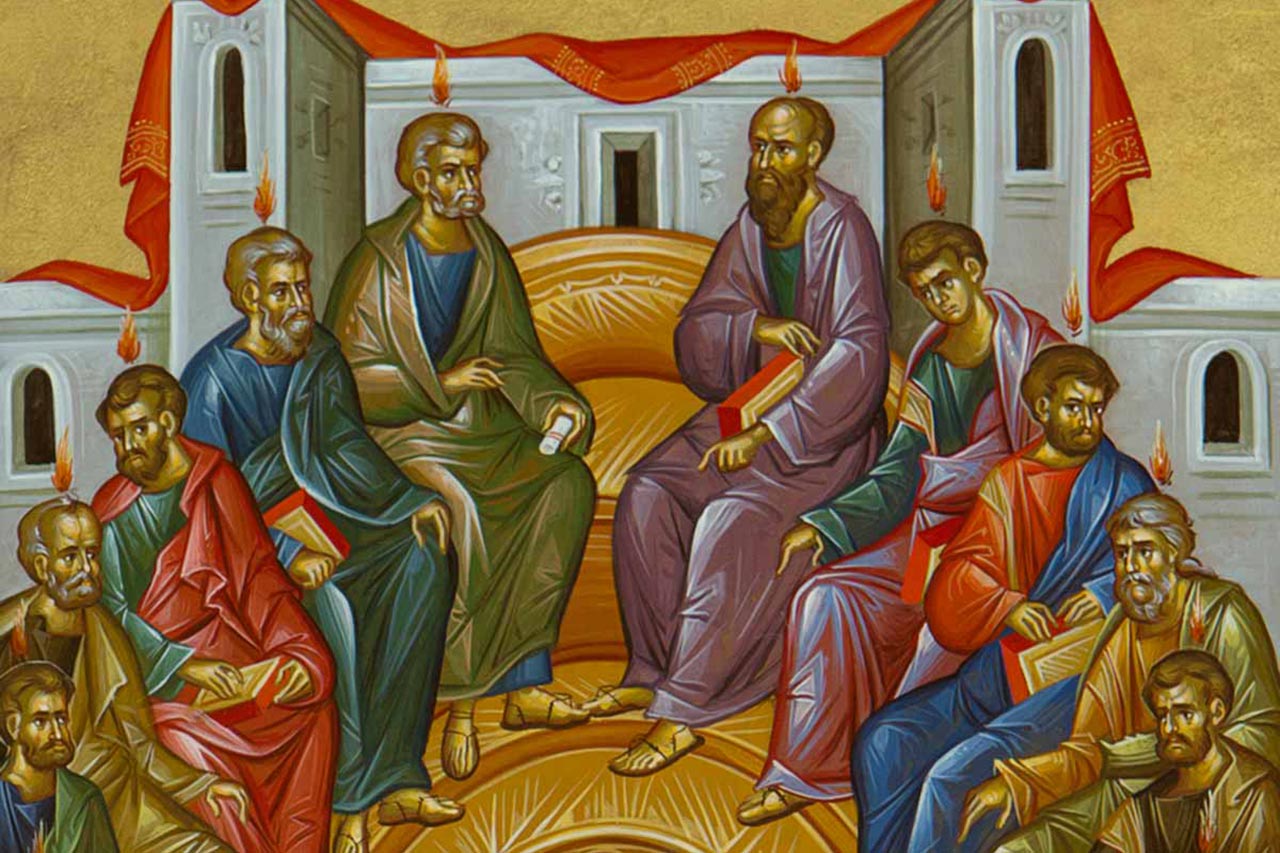
Sermon: Acts 2 and Isaiah 28:5-13, Pentecost

This is the audio (40:21, 36.9 MB) of a sermon preached at our Lithuania home church, Klaipėda Free Christian Church, on May 23, 2021: Pentecost. The main text is Acts 2; I also make reference to Isaiah 28:5-13.

Enjoy hearing the sermon in both English and Lithuanian (back-and-forth)! You can also watch the service on Facebook, including the sermon starting at about 35:00.


Audio and text: ©2021 by Benjamin D. Giffone. Reproduction and distribution are permitted, providing that the author is properly credited and that no fee is charged.

Posted in Bible-Theology, Giffones in Lithuania | Tagged , , , | Leave a comment

Sermon: Called to Community (Philippians 4:10-20)

This is the audio (50:10, 38.1 MB) of a sermon preached at the Kaunas Free Christian Church, on May 16. The main text is Philippians 4:10-20.

Enjoy hearing the sermon in both English and Lithuanian (back-and-forth)! You can also watch the service on YouTube, including the sermon starting at about 46:00.


Audio and text: ©2021 by Benjamin D. Giffone. Reproduction and distribution are permitted, providing that the author is properly credited and that no fee is charged.

Posted in Bible-Theology, Giffones in Lithuania | Tagged , , | Leave a comment

Sermon: A Testimony to the Powers (Ephesians 3:1-13)

This is the audio (41:27, 37.9 MB) of a sermon preached at our Lithuania home church, Klaipėda Free Christian Church, on April 18. The main text is Ephesians 3:1-13.

Enjoy hearing the sermon in both English and Lithuanian (back-and-forth)! You can also watch the service on Facebook, including the sermon starting at about 33:00. It was an all-family affair: Corrie led worship on piano, and Elizabeth played percussion—while Daniel was responsible for the on-screen text.


Audio and text: ©2021 by Benjamin D. Giffone. Reproduction and distribution are permitted, providing that the author is properly credited and that no fee is charged.

Posted in Bible-Theology, Giffones in Lithuania | Tagged , | Leave a comment

Sermon: Matthew 21:1-11, Palm Sunday

This is the audio (31:21, 28.7 MB) of a sermon preached at our Lithuania home church, Klaipėda Free Christian Church, on March 28, Palm Sunday. The main text is Matthew 21:1-11; I also make reference to John 1:9-13 and Zech 9:5–10.

Enjoy hearing the sermon in both English and Lithuanian (back-and-forth)! You can also watch the service on Facebook, including the sermon starting at about 22:10.


Audio and text: ©2021 by Benjamin D. Giffone. Reproduction and distribution are permitted, providing that the author is properly credited and that no fee is charged.

Posted in Bible-Theology, Giffones in Lithuania | Leave a comment

Article on Technology, Worship and Deuteronomy Now Available

Under the terms of publication, I am now permitted to post my 2019 article, “Technologising of Word and Sacrament: Deuteronomy 14:24–26 and Intermediation in Worship” (European Journal of Theology 28.1 [2019]: 66–77).

Continue reading
Posted in Bible-Theology, Culture-Economics-Society, Research | Tagged , , | Leave a comment