On In-Person Worship, Civil Authorities, and Christian Freedom

I’ve prepared an essay entitled, “Technologising of Worship Before and During Pandemic: Epistemology, Eschatology, and Presence,” which is under review with a journal. However, I wanted to share portions of it here before publication, for the benefit of anyone who might be interested.

In his excerpt, I argue that Romans 13 and 1 Corinthians 8 cannot be used to justify Christian leaders’ acceptance of government orders to cease in-person worship, even during a pandemic.

Some might object to strenuous insistence on the essentiality of in-person worship, on the grounds that Christians are obliged to respect civil authorities (Rom 13:1–7), and should be willing to lay down our rights for the sake of others (1 Cor 8:9–13). While these considerations should not be blithely dismissed, such biblical texts and principles cannot faithfully be deployed as justification for suspending in-person worship.

Within the long history of wrestling with Romans 13:1–7 (and related texts) and the relationship of the civil authority, with great diversity of opinion within the Christian family—there is unanimity in the tradition that civil disobedience is justified when civil authorities seek to prevent the proclamation of the gospel (e.g., Acts 4:19–20). To the extent that corporate worship is necessary for gospel proclamation and the formation of disciples (which we will consider below), civil disobedience is justified.

Some Christian leaders argued that 1 Cor 8:9–13 should lead us to lay aside our rights for the good of the community, so that Christians should not assert or exercise their rights to gather for worship, and pastors should not place a stumbling block in the way of their congregations by meeting against the orders or recommendations of government authorities. This interpretation fails to account for the context of 1 Cor 8, where the end to which Paul exercises his Christian freedom (in refraining from eating idol-meat) is in fact embodied fellowship with fellow Christians. Laying down Christian rights to avoid stumbling others involves making necessary accommodations so that others feel safe and welcome coming to worship and enjoying table fellowship. This may entail significant restructuring of worship spaces and ritual acts for health and safety (see the discussion of various technologised restructurings below), so that those who are more vulnerable may join the gathering with as low a risk as possible. Opening the church for worship and allowing individuals to weigh the gains of participation against their own personal risks actually respects the freedom of other believers; closing indefinitely is robbing them of knowing God’s love in a way that is essential for human life.

Christians living under oppressive regimes have long understood that gathering for worship is essential for continuing in the Christian faith—after all, Christians in the book of Acts routinely violated government bans on worship and preaching the gospel. Though Christians in modern secular societies such as Europe and North America must guard against the “martyr complex,” neither should they regard the secular state as an empathetic ally. Civil authorities in secular society, I have argued, do not possess the categories to fully reckon with the “essentialness” of worship—and will therefore never appropriately balance public health concerns with the need for corporate worship. It is therefore the role of Christian leaders to speak out both for the safety of the vulnerable and for the rights of individuals to gather, mediating in good faith between the state and their communities.

Biblically, we must affirm that worship of the Triune God of the Bible is essential to human existence. Human beings were created to give God glory, and we find ourselves living most fully into our image-bearing vocation when we worship. Worship is necessary for a kind of “knowing” that is essential to our human existence, and worship is the chief end of human existence. Without worship, we cannot know who we are or fully be who we ought to be. Modern secular society does not have the categories to assess or embrace this truth claim, and therefore will never successfully balance this aspect of our human identity with other concerns (like economics or physical safety). In the worldview where “religious experience” is merely a construct that brings comfort, community and an ethical framework, worship cannot be an end in itself.

©2020 Benjamin D. Giffone. All rights reserved.

Posted in Bible-Theology, Culture-Economics-Society, Research | Tagged | Leave a comment

New Article in EJT on LXX, Jeremiah, Textual Plurality, and Theological Interpretation

My article, developed from a conference paper delivered several years ago, has just been published:

Benjamin D. Giffone, “Can Theological Interpretation Soften the Protestant Problem of Old Testament Textual Plurality? Jeremiah as a Test Case,” European Journal of Theology 29.2 (2020): 153–178. DOI: 10.5117/EJT2020.2.004.GIFF.

The English abstract is as follows:

Discoveries in the last century which contribute to the field of Old Testament textual criticism raise challenges for Protestant use of the Masoretic Text and canon, and for evangelical doctrines of the authority and perspicuity of Scripture. Protestants maintain that the authority of the New Testament is self-attesting, not derived from the Church. Difficulties arise when Protestants apply this understanding to the Old Testament, particularly to the Masoretic Text and canon used to exclude the Apocrypha. Of particular interest is the Masoretic Text of Jeremiah, which is widely acknowledged by textual critics to represent a later version of the book than the LXX text of Jeremiah. Protestant use of the Masoretic canon (and later text of Jeremiah) in light of the early church’s preference for the LXX (text and canon) entails 1) a recognition that community reception plays a significant role in determining the extent of the canon – and that, through Jerome, Rabbinic Judaism’s Bible served to ‘correct’ the Spirit-filled church’s canon; and 2) that catholicity cannot be an adequate basis for recognizing the Old Testament canon, given that the Church has never been unanimous on this point. Through the lens of the self-attesting witness of the New Testament to Christ, ‘theological interpretation’ of the Old Testament may allow evangelicals to maintain a high view of the Old Testament as Scripture while tolerating some uncertainties concerning the precise text and outer canonical bounds of the Old Testament.

This article reflects my current thinking on some of issues I’ve raised on this blog over the years, including here, here, and here.

Posted in Bible-Theology, Research | Leave a comment

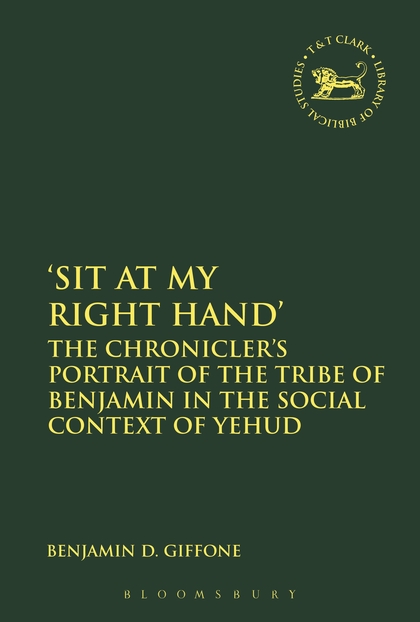
Book Summary: ‘Sit At My Right Hand’

sitatmyrighthandFor the purposes of another project, I recently undertook to write a summary of my 2016 dissertation monograph, ‘Sit At My Right Hand’: The Chronicler’s Portrait of the Tribe of Benjamin in the Social Context of Yehud (available from the publisher or Amazon).

It occurred to me that this 15-page summary might be interesting to those who would not otherwise read the entire book (235pp + indices). Let me know what you think!


Posted in Bible-Theology, Research | Leave a comment

Book Review: “Tracking the Master Scribe”

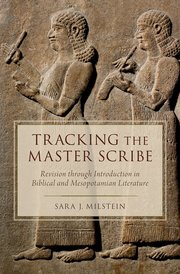
9780190205393My review of Sara J. Milstein’s Tracking the Master Scribe has been published in the most recent issue of Canadian-American Theological Review. Here is an excerpt from the conclusion, but you should subscribe to read the full review and all the excellent articles in the journal!

Biblical scholars and informed lay readers interested in literary structure and comparative studies will find much to appreciate about Milstein’s book. Theological readers will find in Milstein’s work and the stream of books on textual development of the Hebrew Bible an important reminder—dare I say, a corrective—concerning the significance of diachronic studies for theological readings of the Hebrew scriptures, amid the recent turn toward “Theological Interpretation” and other synchronic readings. In particular, Tracking the Master Scribe has drawn attention to the significance of introductory material in framing the body of a text—as a complement to significant studies that focus on narrative endings.

Even the reader who does not share all of Milstein’s conclusions will appreciate her contributions to close readings of the texts and her compelling comparative evidence from Mesopotamian literature, which remains relevant to non-diachronic readings of biblical texts. Finally, Milstein is a genuine pleasure to read for her brevity, her style in prose, her sense of humor, and the clever stories and sayings that frame the chapters—usually as part of the introduction, of course.

Benjamin D. Giffone, “Review: Sara J. Milstein, Tracking the Master Scribe: Revision through Introduction in Biblical and Mesopotamian Literature (London/New York: Oxford University Press, 2016),” CATR 9.1 (2020): 78–82.

Posted in Bible-Theology, Research | Tagged , | Leave a comment

Sermon: Naomi—The Female Job

Schnorr_von_Carolsfeld_Bibel_in_Bildern_1860_085[1]This is the audio (37:36, 34.4 MB) of a sermon preached at our Lithuania home church, Klaipėda Free Christian Church, on July 26. The sermon is titled, “Naomi—The Female Job.” The main texts are Ruth 1:1–13, 19–21; 3:1–4; 4:13–22.

Continue reading

Posted in Bible-Theology, Giffones in Lithuania | Tagged | Leave a comment

Sermon: The Mother of All Who Believe

Schnorr_von_Carolsfeld_Bibel_in_Bildern_1860_085[1]This is the audio (43:00, 39.4 MB) of a sermon preached at our Lithuania home church, Klaipėda Free Christian Church, on July 12. The sermon is titled, “The Mother of All Who Believe,” focusing on the character of Ruth. The main texts are Ruth 1:11–18; 2:2–3, 12; 3:1–13.

Continue reading

Posted in Bible-Theology, Giffones in Lithuania | Tagged | Leave a comment

Sermon/Devotional: Think Local

FPC Endicott, NYThis is the video of a devotional recorded for our sisters and brothers at First Presbyterian Church of Endicott, NY entitled, “Think Local”; the text was Philemon 10–12. I plucked up my courage (or perhaps chickened out—you decide) and addressed the meta-issue of Christian engagement with the world.

Posted in Bible-Theology, Culture-Economics-Society, Giffones in Lithuania, Research | Tagged , , | Leave a comment

Sermon: His Delight Is in YHWH’s Law

Schnorr_von_Carolsfeld_Bibel_in_Bildern_1860_085[1]This is the audio (41.07, 56.4 MB) of a sermon preached at our Lithuania home church, Klaipėda Free Christian Church, on May 24. The sermon is titled, “His Delight Is in YHWH’s Law,” focusing on the character of Boaz. The main texts are Ruth 2:8-12 and 4:1-13.

Continue reading

Posted in Bible-Theology, Giffones in Lithuania | Tagged | Leave a comment

Legaspi on the Academic and Scriptural Bibles

“I believe that the scriptural Bible and the academic Bible are fundamentally different creations oriented toward rival interpretive communities. Though in some ways homologous, they can and should function independently if each is to retain its integrity. While it is true that the scriptural reader and the academic interpreter can offer information and insights that the other finds useful or interesting, they remain, in the end, loyal to separate authorities. I grant the moral seriousness of the modern critical project and, to a modest degree, the social and political utility of the academic Bible. I also grant the intellectual value of academic criticism. A rational, irenic study of the Bible supported by state resources and disciplined by academic standards cultivated across a range of fields has produced, in a relatively short time, an astonishing amount of useful information. It has become dear, though, that academic criticism in its contemporary form cannot offer a coherent, intellectually compelling account of what this information is actually for. What critics like Collins have done as a result is to shift the rationale for modern criticism away from the intellectual and back toward the social and moral. There is value in the social and moral by-products of academic criticism, in things like tolerance, reasonableness, and self-awareness. The problem is that these rather thin, pale virtues seem only thinner and paler when compared to the classic virtues associated with the scriptural Bible: instead of bland tolerance, love that sacrifices self; instead of an agreeable reasonability, hope that opens the mind to goodness and greatness that it has not yet fully imagined; and instead of critical self-awareness, faith that inspires and animates the human heart. Academic criticism tempers belief, while scriptural reading edifies and directs it. In this sense, they work at cross-purposes. Yet each mode presumes the value of knowledge. Perhaps the two are closest, then, when in that brief moment before thought recognizes itself, the mind wavers between words that have suddenly become strange, and knowledge is a choice between knowing what the text said and knowing what the words might be saying. It is a choice, at such a moment, between the letter that has been revived and the letter that never died.”

Michael C. Legaspi, The Death of Scripture and the Rise of Biblical Studies (Oxford Studies in Historical Theology; Oxford/New York: Oxford University Press, 2010), 169.

Posted in Bible-Theology, Research | 2 Comments

Sermon: “I Have Been a Sanctuary”

443f7566-e203-4ac5-a618-9679d16fb53b[1]

This is the video (26:21, 92.7 MB) of a sermon preached for First Presbyterian Church of Mount Holly, NJ, on April 26. The sermon is titled, “I Have Been a Sanctuary,” and the main text is Ezekiel 11:14–25.

Continue reading

Posted in Bible-Theology, Giffones in Lithuania | 1 Comment