Update: Birthdays, Baptism, Papers, Preaching

I’ve been light in the blogging department lately. July has turned out to be quite a busy month.

We went to Montreal from Canada Day to Independence Day (July 1-4) to visit Josh and Bekah. Pictures are up on Facebook.

When we got back, I immersed myself in ANE city laments, working on chapter 3 of my thesis, which is due on August 11.

I also have prepared two sermons for tomorrow’s services at Preakness Valley URC in Wayne, NJ. This might be one of the last times I go up there for a while, because they finally have a new pastor! He moves from Michigan and will be installed at a service on September 9, d.v. But I hope to still visit these dear brothers and sisters from time to time as there is need. I hope to post the audio of the sermons sometime this week.

Last week we celebrated three family birthdays: Daniel (7/25), Corrie’s Aunt Becki (7/27), and my Grandpa Frank (7/27). Daniel also was baptized on Sunday, and we had a lovely party afterward at my in-laws’ to celebrate.

Hopefully I’ll be able to provide some better content on the blog in the weeks to come. I just got some feedback from Dr. Jonker on my first two chapters, so maybe I’ll post little excerpts for your critique.

In the meantime, have a great summer! (Or winter if you’re in the southern hemisphere.)

Posted in Uncategorized | Leave a comment

Lament Over the Destruction of Sumer and Ur

LSUr[1] is the longest of the extant city laments, at a length of 519 lines divided into five kirugus.  Roughly eighty percent of the text is preserved on over thirty tablets.[2]  Michalowski posits that LSUr adapted the structure of CA: the curse is directed not at the city but at its enemies.[3]

LSUr begins with the decision of the high divine council to bring calamity upon Sumer and Ur.  One of the reasons for this calamity may have been overpopulation; in numerous instances the people are said to be “numerous” (41, 123).  The divine decree is “to break up the unity of the people of Nanna, numerous as ewes” (30), and the god Nanna is said to have “traded away his people numerous as ewes” (103).  Familial and social relationships are abandoned or broken as part of the destruction wrought by divine decree (12-16, 93-98).  In another instance, all Ur suffers the same fate, besieged together by Elam (387-405).

The attack on the city results in the dispersion of the people: “Nintu had scattered the creatures that she had created” (24); “Nintu wept bitter tears over her creatures that she had created” (147).  The people are said to have scattered like a school of fish (301,407a).  The people are driven out of their homes (32, 186-87).  Many are killed; others become fugitives and refugees (186-87, 407, 431).  King Ibbi-Sin is taken to exile in Elam (35-37), along with the priests (345) and many of the people (71, 251-53).

The invasion of foreigners is a key part of the calamity, not just because of the attack but also because of the defilement of the city and temple (197).  Foreigners, having overtaken the city, “even chase away the dead” (86).  The city treasures (169) and the temple personnel and sacred articles (446) are carried off.

As in LU, the destruction of Ur in LSUr is ubiquitously described as a great flood/storm (59, 76, 81, 94, 107-08, 113, 163, 175-77, 207, 214, 405, 427, 456),[4] including an adjuration to the storm itself at the beginning of the fifth kirugu (483-91).The invaders wreak indiscriminant havoc just as a flood—no one is spared.

The deities depart the cities of Sumer as the temples are destroyed one by one.  Some of the deities become refugees (207-09), whereas others are said to have gone into exile with their people to Elam (271-78).  The deities lament the loss of their people (147-48, 178-79, 225-42, 273-78).  The restoration of the life and prosperity of the people is the decree of Enlil that triggers the restoration in the fourth and fifth kirugus (461-74; 509-13).


[1] Piotr Michalowski, The Lamentation Over the Destruction of Sumer and Ur (Winona Lake, Ind.: Eisenbrauns, 1989); full text also available here.

[2] Ferris, “Lamentations: 2. Ancient Near Eastern Background,” 410-13 in T. Longman and P. Enns, eds.,  Dictionary of the Old Testament: Wisdom, Poetry and Writings (Downers Grove, Ill.: InterVarsity Press, 2008), 411

[3] Michalowski, The Lamentation Over the Destruction of Sumer and Ur, 9.

[4] Fleming ( “Ur: After the Gods Abandoned Us,” The Classical World 97 [2003]: 5-18.) compares the flood motifs in LU and Mesopotamian universal flood myths such as Atrahasis (14-18).

Posted in Bible-Theology, Research | 1 Comment

Signs You’re At a Megachurch

I was cleaning out some old files, and discovered this list I made up for a chapel sermon back in 2005:

Benj’s Top Ten Signs You’ve Visited a Megachurch

10. You park in section N3.

9. You take the shuttle from section N3 to the main complex.

8. You see vendors wandering the aisles of the sanctuary selling “Our Daily Bread,” WWJD bracelets, and Ichthus bumper decals.

7. Your kid brother is in a Sunday School class with children born in the same month he was.

6. When you drop him off at Sunday School, you and your brother each receive an irremovable bracelet with a tracking device and a 6-digit ID number.

5. The bulletin is longer than the Dodgers’ yearbook.

4. There are discipleship groups for left-handed, red-headed, former homosexuals.

3. The list of pastors’ phone numbers on the bulletin is longer than the members’ directory of your church back home.

2. The local high-school’s swim team trains in the baptismal during the week.

1. The church’s annual budget and the acreage of the church’s property exceed those of a Middle Eastern country.

Did I miss anything?

Posted in Uncategorized | 1 Comment

Isaiah 6: Meeting a Holy God

“Meeting a Holy God” is a sermon I preached at Preakness Valley United Reformed Church in Wayne, NJ, on June 26, 2011. The text is Isaiah 6.

Here is the MP3 audio (32:56, 30.2MB), and an excerpt:

Isaiah cries out, “Woe is me!” Now, in the previous chapter, a poetic oracle, Isaiah said six times, “Woe to you,” condemning those who oppressed the poor, and disregarded the Law of God, and lived lives of debauchery.  The full revelation of YHWH’s holiness has made Isaiah realize—I am just as unclean as these people to whom I preach.  I am a sinner.  I am unfit to stand before a holy God.

You may also be interested in sermons on Isaiah 5 and Isaiah 7.

—-

Audio and text: ©2011 by Benjamin D. Giffone. Reproduction and distribution are permitted, providing that the author is properly credited and that no fee is charged.

Posted in Uncategorized | 2 Comments

Lord Forgive Us All

This is awful. Thousands of American lives have been lost, and tens of thousands of Iraqi and Afghani wives and mothers have also mourned husbands and sons.

Let us never forget that war is itself an attrocity.

Posted in Uncategorized | Leave a comment

Preaching Last Sunday; Anniversary

Thank you for your prayers during this past Sunday evening; my sermon on Isaiah 6 went well, I think. Corrie and I ran into some traffic, and began panicking when we realized we were very low on gas. In the end, we arrived at PVURC five minutes before the service began (rather than our usual half-hour buffer!). But the service went on without other incident. God was glorified–and he would have been anyway, even if we had been a few minutes late.

Lord, forgive my anxiety and worry, and help me to trust you always.

Regarding the audio, I forgot to request a recording of the sermon while I was there, so I’ll have to wait a few days for the CD. I will get it up on the “Papers and Presentations” page ASAP when we get back from Montreal.

On this day four years ago, I married Corrie Elizabeth Hesh. Words can’t describe how happy we are. Now a son completes and compounds our joy. Love is wonderful.

וַיִּקְרָא אֶת-שְׁמָהּ אֶבֶן הָעָזֶר וַיֹּאמַר עַד-הֵנָּה עֲזָרָנוּ יְהוָה

Posted in Uncategorized | 2 Comments

Links: 29 June 2011

Mike Munger of Duke tries to build a bridge between economists and ethical philosophers. He coins a new word: "euvoluntary." This article might warrant its own blog post at some point, but here’s a podcast where Munger discusses the idea.

I found this XKCD comic chuckleworthy–and profound. Is every finer taste worth cultivating?

Getting technical, Caplan and Miller demonstrate that more educated people tend to think like economists on economic issues.

I had forgotten the remarkable story of Alexis St. Martin, the early nineteenth-century man who lived much of his life as a scientific "freak show" with an open hole in his stomach.

Some honest words from a prominent NT scholar.

Are we responsible for all our actions? What does responsibility even mean?

Posted in Links, Uncategorized | Leave a comment

This post is like a box of chocolates

I’ve been a little light in the blogging dep’t lately. My self-imposed deadline for the submission of my first two thesis chapters (out of six) is next Thursday, as is my fourth wedding anniversary. I’m also preaching this Sunday evening at PVURC in Wayne; I will be "continuing" on Isaiah, this time in chapter six. (C’mon out if you’re in North Jersey! Service is at 6pm.)

The thesis has been quite the project thus far. I realized three weeks ago why I was so restless: the project became at that time the longest piece I’d ever written, measured by word count. I’m now well beyond 15,000 words, and still have aways to go in these two chapters. I feel like I should be resolving my paper, rounding out my argument–but I’m just getting started: this is no article or conference paper. Oh, well.

After my deadline on June 30, we will be spending a long weekend in Montreal with my sister and brother-in-law, who have recently returned from Scotland. This will be our first time in Montreal, and their first time seeing Daniel in person.

If you think of us, pray for my studies and my ministry; for Corrie’s ministry as a teacher, mother and wife; and for our travels. Pray also for PVURC: they have been without a pastor for nearly eighteen months, and they will be receiving a decision this weekend from the pastoral candidate that they called. The head elder told me, "When you come Sunday night, we’ll either be really excited, or really glum!" Let’s pray that they will have cause for excitement and rejoicing.

Posted in Uncategorized | Leave a comment

Links: 16 June 2011

As someone who works in pharma and is also concerned about the (lack of) integrity of academic research, this article troubles me, if it’s true.

John Hobbins at AHP has some good thoughts (as usual) on the OT canon, and on how to maintain language ability for scholarly activity.

I ran into the “Abba = ‘Daddy'” myth in one of my readings, so with Father’s Day coming up, I thought it would be worth linking to this refutation by Steve Caruso.

Ah, the irony of Che’s legacy.

Posted in Links, Uncategorized | Leave a comment

Travelogue IV: Wine and Wins, Flora and Fauna

In this post I plan to wrap up my series, covering nearly four weeks of my various traipsings through Wisconsin, Minnesota, Amsterdam and South Africa (here, here and here).

I took my first exam (Old Testament criticism) the Wednesday after I arrived in Stellenbosch.  It was the first exam I had taken in nearly three years, since PBU courses didn’t typically require exams.  I had never taken an oral examination before, so I was a bit nervous.  But  supposed that there was only so much Dr. Jonker could ask about each of seven books in an hour–at worst, I’d only have to talk about each book for 8.6 minutes, right?  It turned out to be quite enjoyable: we sat in his office and talked about the Old Testament.  He was gracious enough to give me quite a high mark–the equivalent of an A on an American scale.

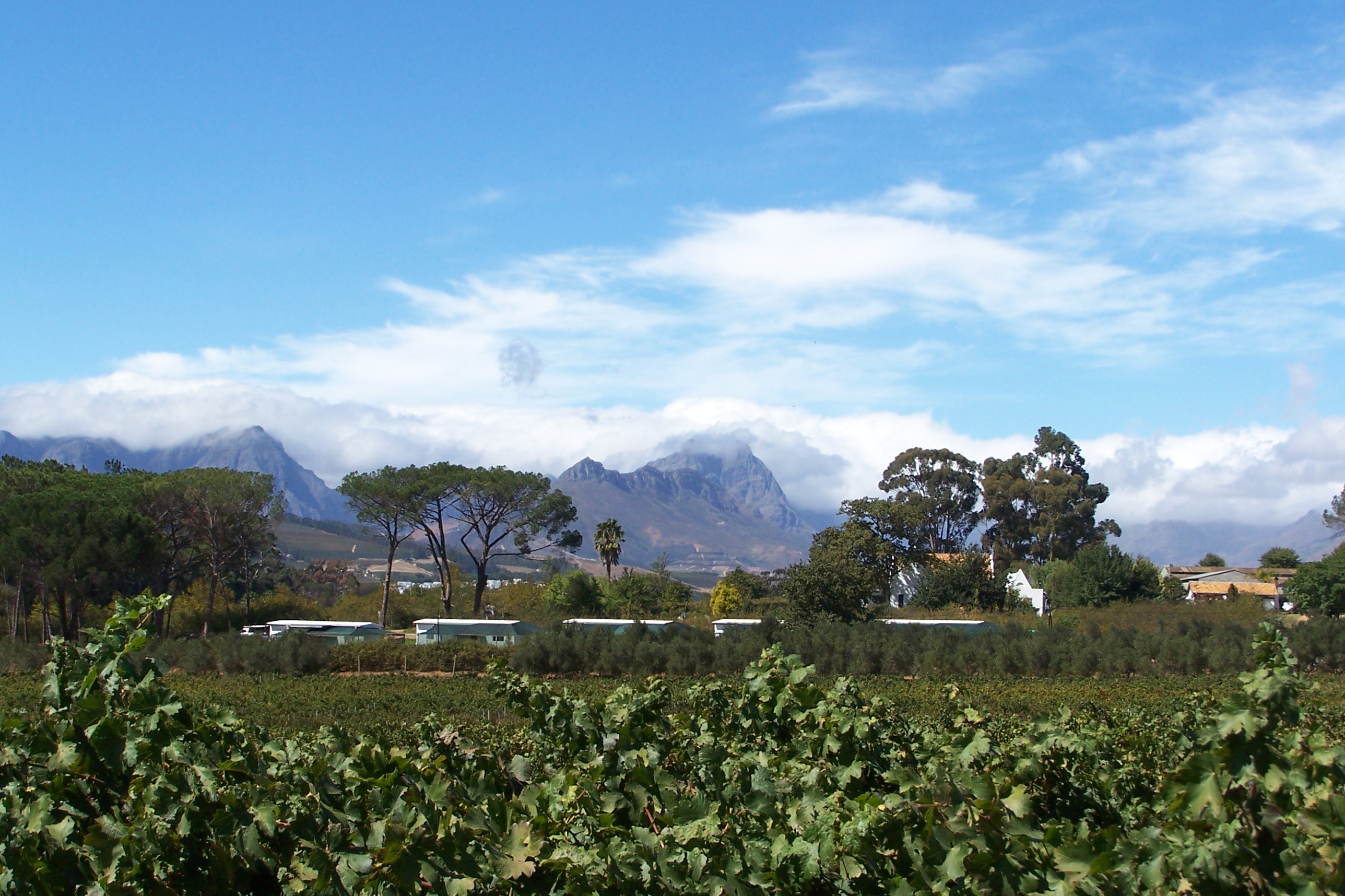
My second exam was not until Monday, and so I took some time Thursday to Saturday for some sightseeing.  Thursday I took a wine tour–my first ever.  The hotel arranged it, and I wasn’t quite sure what it would be like.  Turns out I was the only one on the tour; for about $25, my driver took me to as many wineries in the area as I wanted.  At each place I tasted perhaps 7-10 wines–usually for free or a few rand.  It was quite a pleasant experience; I had the same “aspiring elitist” feeling I get when I visit art museums (or do archaic things with words, such as using the diëresis)–except that I actually enjoyed myself.

I’ve posted quite a few more photos from the wine tour here.
The wind was quite strong that day, and my touristy, wide-brimmed cloth hat nearly blew away several times.  (I decided that looking silly was a small price to pay for avoiding skin cancer, but I was certainly not going to wear the chin-strap-thingy with the hat.  I do have a tiny shred of dignity when it comes to fashion.)
During my meanderings about town, I ran across many interesting buildings and signs.
The Burgerhuis Museum is in a small Cape Dutch colonial house:
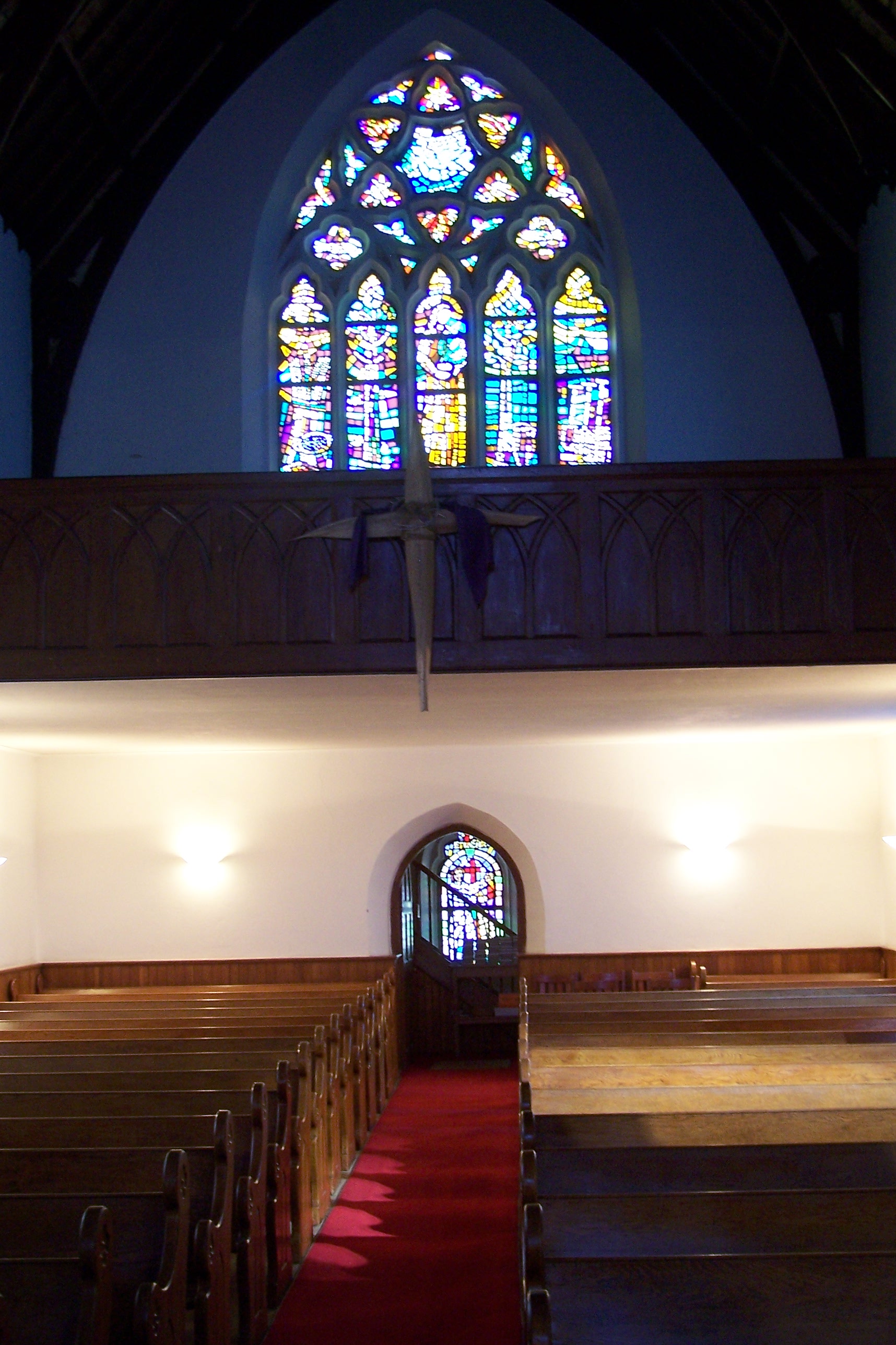
This is the Moederkerk, the oldest “Mother church” in Stellenbosch:

The University has a horticulture program and beautiful botanical gardens:

This is the store of a local eccentric who repairs–you guessed it–guns and clocks:

A strange advertisement on a car–outside the liquor store, no less:

I didn’t get an explanation on this one until later:

I had made arrangements with the brother of a friend of a friend (who was in Apollo 13 with Kevin Bacon) to see Cape Town on the Saturday before I left.  Piet and his girlfriend, Colette, gave me the grand tour of the city, including a cable-car ride up Table Mountain, sushi at a fine restaurant and a hike through Kirstenbosch Gardens.  I took dozens of photos, including these near the mountain:
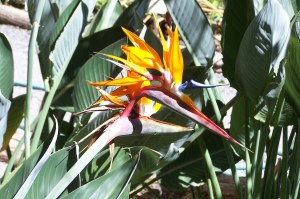
Table Mountain runs the length of the Cape Peninsula, so from the top you can see the Atlantic Ocean to the west, the coast leading up to Namibia to the north, and the Indian Ocean to the south and east.  The city is between the mountain and the Indian Ocean.  The mountain, as its name suggests, is long, flat on top, and steep down the sides.  It is possible to hike to the top, but we took the cable car (a much more pleasurable experience in the near 100ºF heat).  The Gardens were incredible; South Africa has more species and varieties of flora and fauna of any nation on earth.
I spent nearly all of Sunday in my hotel room, reading for my Philosophy of History exam the next day.  I was dismayed by how uneducated I am in the area of philosophy, but heartened by my experience earlier in the week with an oral exam.  My hope was that Dr. Vosloo would focus on Ricoeur’s Memory, History, Forgetting, with which I am starting to feel reasonably comfortable.  My hopes were realized, and the exam turned out just fine.  I was quite pleased with a B+ grade–not bad, seven years removed from Honors Philosophy in college.  More important than the grade, I feel that mastering those readings gave me a stronger theoretical foundation for the historical component of my thesis.
Helen, the owner of the hotel, drove me to the airport for my 11:50 flight Tuesday night.  As I awaited the boarding call, I reflected on my first time in Africa.  I didn’t come up with anything terribly introspective or brilliant–just that I had enjoyed myself but was pleased to be returning to my wife and baby.  How nice it would be, I thought, to bring them here.  Someday….
Posted in Uncategorized | Leave a comment